Early vs Advanced Gum Disease Treatment: What to Know

Gum disease rarely announces itself with drama. It usually starts quietly, with a little bleeding in the sink, some tenderness along the gumline, or breath that does not improve no matter how carefully someone brushes. Because the early stage can seem minor, many people assume it can wait. That assumption is where trouble begins.
The difference between early and advanced gum disease treatment is not just the type of cleaning used in the dental chair. It is the difference between reversing inflammation and trying to control lasting damage. It can mean the difference between a few focused hygiene changes and months of deeper treatment, maintenance visits, and in some cases surgery.
Dentists and hygienists see this pattern every week. Someone comes in thinking they need a routine cleaning, but the tissues tell a different story. The gums are puffy, they bleed on probing, there is tartar below the gumline, and the bone support around the teeth has started to shrink. At that point, the conversation shifts from simple prevention to active Gum Disease Treatment.
Understanding where the line falls between early disease and advanced disease helps patients make better decisions, ask smarter questions, and avoid losing ground that is difficult to regain.
What gum disease actually is
Gum disease, also called periodontal disease, is an inflammatory condition driven by bacterial plaque and the body’s response to it. Plaque is a sticky film that forms constantly on the teeth. If it is not removed thoroughly, it hardens into tartar, also called calculus. Tartar creates a rough surface where more bacteria can accumulate, especially around and under the gums.
At first, the inflammation is limited to the gum tissue. This stage is called gingivitis. The gums may look redder than usual, feel tender, or bleed during brushing and flossing. The key detail is that gingivitis has not yet caused irreversible loss of the bone and connective tissues that hold the teeth in place.
Once the inflammation progresses deeper and begins destroying the supporting structures, it becomes periodontitis. That change matters. Bone loss does not grow back on its own. Even when treatment works very well, the goal often shifts from reversing the condition to stabilizing it and preventing more destruction.
That is why early diagnosis changes the entire trajectory.
The practical difference between early and advanced disease
From a patient’s point of view, the early stage often feels inconsistent with the diagnosis. A person can have early gum disease and little or no pain. In fact, pain is a poor guide here. Gum disease is often more dangerous when it is quiet.
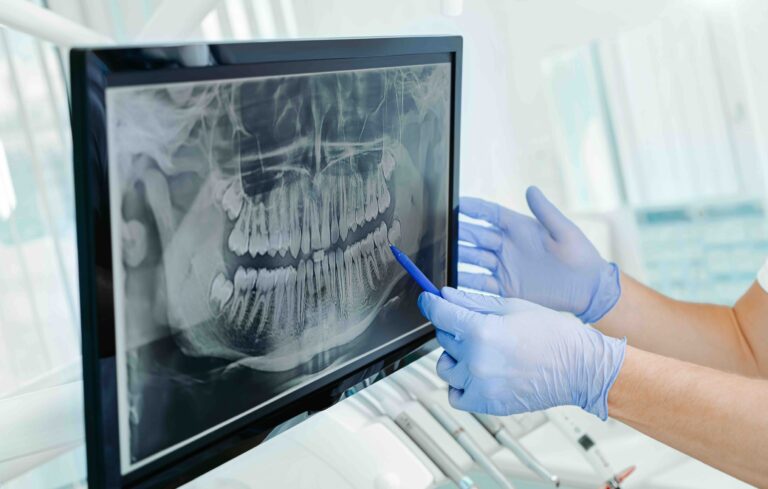
Advanced disease tends to bring clearer signs. Teeth may feel loose. The gums may recede enough to make teeth look longer. Spaces can open where food gets trapped. Some people notice pus, a bad taste, or bite changes. Others only realize something is wrong when a dentist shows them an X-ray and points to the missing bone around the roots.
Clinically, dental professionals distinguish early from advanced disease by measuring pocket depths around the teeth, checking for bleeding, evaluating gum recession, and reviewing radiographs for bone loss. Healthy gums usually hug the teeth closely. As disease progresses, the attachment loosens and pockets deepen, creating sheltered areas where bacteria thrive. A routine cleaning no longer reaches those zones effectively.
A patient with early gingivitis may need a professional cleaning and improved home care. A patient with advanced periodontitis may need deep cleaning below the gums, localized antimicrobial therapy, frequent periodontal maintenance, possible extraction of hopeless teeth, and sometimes referral to a periodontist for surgical care.
Those are very different treatment roads.
Early gum disease treatment is usually conservative, but it still requires commitment
When gum disease is caught at the gingivitis stage, treatment is often straightforward. That does not mean casual. Early treatment works best when patients take it seriously before damage starts spreading beneath the surface.
A typical early treatment plan often includes:
- A thorough professional cleaning to remove plaque and tartar above and slightly below the gumline
- Specific instruction on brushing technique, flossing, or interdental cleaning
- Short term use of an antimicrobial rinse when appropriate
- Review of habits that worsen inflammation, such as smoking or inconsistent home care
- Reassessment after a few weeks to confirm bleeding and swelling have improved
In many cases, the gums respond quickly. It is not unusual to see less bleeding and firmer tissue within two to four weeks when the plaque burden is reduced and daily cleaning improves. That quick response can be encouraging, but it can also create a false sense of security. Patients sometimes feel better and slide back into old habits. Then the inflammation returns.
One detail worth stressing is that early treatment depends heavily on technique, not just effort. Plenty of people brush twice a day and still miss the gumline consistently. Others floss with a sawing motion that snaps past the contact point but never curves against the tooth or reaches under the gum margin. A few minutes of skilled coaching can make a bigger difference than adding another mouthwash to the bathroom shelf.
I have seen patients who thought they needed major dental work when what they really needed was better plaque control around crowded lower front teeth and old fillings that trapped debris. Once those issues were addressed, the gums settled down fast. Early disease often gives you that kind of second chance.
Advanced gum disease treatment is more involved because the anatomy has changed
Once periodontitis takes hold, the tissues around the teeth are no longer intact in the same way. The bone may be reduced. The gum attachment may have migrated down the root. The pockets may be too deep for a toothbrush or floss alone to manage. This is where advanced Gum Disease Treatment becomes both more technical and more maintenance heavy.
The first major step is often scaling and root planing, commonly called deep cleaning. This is not simply a more vigorous version of a regular cleaning. The goal is to remove tartar, bacterial deposits, and contaminated root surface material from below the gums where infection persists. Local anesthetic is frequently used because the instruments must reach deeper areas around the roots.
After that initial therapy, the tissues are reevaluated. Some sites improve dramatically once the bacterial load is reduced. Others remain deep or inflamed, especially around molars with furcations, the areas where roots split. Those teeth are harder to clean and often harder to save.
At that point, care may branch into several directions. Local antibiotic placement inside selected pockets may help in some cases. Bite adjustment may be considered if traumatic forces are worsening mobility. Teeth with severe bone loss may be splinted in carefully chosen cases. When pockets remain too deep to maintain non surgically, periodontal surgery may be recommended to gain access for thorough cleaning, reshape bone defects, or regenerate support where conditions allow.
The language can sound intimidating, but the underlying principle is simple. Advanced disease creates hidden, altered spaces that bacteria can recolonize easily. Treatment tries to reduce those spaces and make the mouth maintainable again.
A side by side look at treatment expectations
| Feature | Early gum disease | Advanced gum disease | | --- | --- | --- | | Typical diagnosis | Gingivitis | Periodontitis | | Tissue damage | Usually reversible inflammation | Irreversible attachment and bone loss | | Common symptoms | Bleeding, redness, mild swelling | Deep pockets, recession, loose teeth, bone loss | | Standard treatment | Routine professional cleaning and home care improvement | Deep cleaning, periodontal maintenance, possible surgery | | Long term goal | Restore healthy gums | Control infection and prevent further breakdown |
This comparison can help clarify why people sometimes feel surprised by the cost and complexity of care. They may have come in expecting a standard cleaning and left hearing about quadrant scaling, periodontal charting, maintenance intervals, and possible specialist referral. From the outside, that can feel abrupt. From a clinical standpoint, it reflects a real change in disease stage.
Why delaying treatment makes everything harder
The hardest conversations in dentistry are often not about procedures. They are about timing. Gum disease usually gives people a window in which intervention is simpler, cheaper, and more predictable. Miss that window, and options narrow.
There are several reasons delay matters. First, bacterial deposits continue to mature and spread deeper. Second, chronic inflammation continues to destroy supporting tissues. Third, the mouth becomes harder to keep clean as recession, mobility, and open contacts create new problem areas. Finally, the patient’s habits often become more entrenched over time, which makes behavior change tougher when it becomes truly necessary.
One common example is the smoker with occasional bleeding who avoids care because nothing hurts. A year or two later, that same patient may present with generalized bone loss and minimal obvious inflammation, because smoking can mask bleeding while worsening the disease underneath. By then, treatment is no longer about reversing gingivitis. It is about limiting how many teeth can be retained long term.
Diabetes is another important variable. Poorly controlled blood sugar can intensify periodontal inflammation and slow healing. In practice, that means advanced gum disease in a diabetic patient can be more stubborn, more recurrent, and more intertwined with overall health. Managing one condition often helps the other, but only if both are addressed.
Not every case fits neatly into a textbook category
Real mouths do not always present in tidy stages. Someone may have mild gingivitis in one area and moderate periodontitis around a few back teeth. Another patient may have old recession from aggressive brushing and very little active disease. A third may have deep pockets caused partly by gum enlargement around orthodontic appliances or certain medications.
That is why good periodontal care depends on judgment, not just measurements. Pocket depth alone does not tell the whole story. Neither does a single X-ray. Bleeding patterns, plaque levels, smoking status, dexterity, medical conditions, previous cleanings, and the patient’s ability to maintain home care all influence treatment planning.
For example, a healthy young adult with localized early periodontitis around lower front teeth from crowding may respond beautifully to deep cleaning plus excellent daily care. A person in their sixties with generalized deep pockets, dry mouth from medications, and reduced hand mobility may need a more protective long term plan, even if the disease activity looks similar on paper.
This is one reason second opinions can sometimes sound different without either dentist being wrong. The biology matters, but so does the context.
What treatment feels like from the patient side
Patients often ask a practical question before anything else: what is this going to feel like?
Early treatment is usually comparable to a standard dental cleaning, though areas of inflammation can be tender. If the gums bleed, that does not mean the cleaning harmed them. It usually reflects existing inflammation. Most people notice improvement in comfort rather than worsening after the appointment.
Advanced treatment, especially scaling and root planing, can involve more sensitivity during and after care. Local anesthetic usually keeps the procedure tolerable. Afterward, some soreness, transient tooth sensitivity, and mild gum shrinkage are common. That last point surprises people. As inflamed tissue heals and tightens, the gums may recede slightly, exposing more root surface. It can look alarming if no one warns you, but it often reflects healthier tissue rather than a new problem.
If surgery is needed, recovery depends on the procedure. Some are relatively modest and localized. Others involve grafting or more extensive reshaping. A careful dentist or periodontist will explain the likely course clearly, including how long tenderness may last and when normal cleaning can resume.
The emotional side matters too. Patients with advanced disease often feel guilt, embarrassment, or fear that they have ruined their teeth. That feeling is understandable, but not helpful. Periodontal disease is common, influenced by genetics and health factors as well as home care, and very often manageable once properly addressed.
The maintenance phase is where long term success is won or lost
Many patients think treatment ends when the deep cleaning or surgery is over. In periodontal care, that is usually the midpoint, not the finish line.
After active Gum Disease Treatment, maintenance becomes critical. Periodontal maintenance visits are typically scheduled more often than standard cleanings, commonly every three to four months depending on risk. There is a biological reason for this. The bacterial community in periodontal pockets can repopulate relatively quickly, and patients with a history of periodontitis remain more vulnerable than those who have never had it.
At maintenance visits, clinicians do more than polish the teeth. They reassess pocket depths, bleeding points, plaque retention areas, recession, mobility, and changes in bone support over time. They clean below the gumline as needed and reinforce home care in a targeted way.
Patients sometimes resist this schedule because they feel fine. Feeling fine is not a reliable marker of stability. Some of the most advanced periodontal breakdown happens with remarkably little discomfort. Maintenance is one of those situations where discipline pays off quietly and steadily.
The patients who keep their teeth for years after advanced treatment are rarely the ones with perfect mouths to begin with. More often, they are the ones who show up consistently, adapt their home care honestly, and respond early when a small area starts slipping.
Home care matters, but it has to match the condition
Telling patients to brush and floss more is not enough. The tools and methods have to fit the anatomy and the stage of disease.
A person with early gingivitis may do well with an electric toothbrush, floss, and focused attention to the gumline. Someone with advanced disease and open embrasures, the spaces between teeth created by recession, may get far more benefit from interdental brushes than from floss alone. A patient with bridges, implants, or limited dexterity may need threaders, water flossing devices, or modified handles.
The most useful home care plans are usually the simplest sustainable ones. An elaborate routine that lasts five days is less valuable than a realistic routine followed for five years. That may mean starting with one change, such as using interdental brushes every night around the back molars where the disease is worst, then adding refinements after the habit sticks.
Two details are often overlooked. Toothpaste does not compensate for poor technique, and bleeding is not a reason to avoid cleaning the area. If the tissue is inflamed, gentle disruption of plaque is part of how it heals. Avoiding the spot because it bleeds almost always makes the problem worse.
Signs you should not ignore
Some symptoms deserve prompt evaluation because they suggest disease is moving beyond a mild, easily reversible stage.
- Gums that bleed regularly with brushing or flossing
- Persistent bad breath or a bad taste that returns quickly
- Teeth that feel loose, shifted, or different when biting
- Gum recession that seems to be getting worse
- Swelling, drainage, or tenderness near the gumline
None of these signs guarantees severe disease, but each warrants a proper periodontal exam. Waiting for pain is a mistake.
Questions worth asking at your dental visit
Patients often leave appointments remembering only half of what they heard. A few direct questions can make the situation much clearer.
Ask whether the condition is gingivitis or periodontitis. Ask whether bone loss is present on X-rays. Ask how deep the pockets are and whether any areas are especially concerning. Ask what kind of cleaning is recommended and why a routine cleaning would or would not be appropriate. Ask what results should be expected after treatment, and what kind of maintenance schedule will likely follow.
Those questions help patients distinguish between temporary gum irritation and a chronic periodontal condition that needs structured care.
The bottom line on early versus advanced treatment
Early gum disease treatment aims to reverse inflammation before the supporting tissues are damaged. Advanced gum disease treatment aims to control a disease that has already changed the foundation around the teeth. That distinction is the whole story.
If gum disease is caught early, treatment is often conservative and highly effective. If it is caught late, treatment can still protect teeth and improve oral health, but it becomes more involved, more expensive, and more dependent on long term maintenance. Neither stage should be ignored, but the early stage offers the best opportunity for a clean reset.
For patients, the practical takeaway is simple. Bleeding gums are not normal. Bad breath that lingers despite brushing is worth investigating. And a recommendation for deeper periodontal care is not salesmanship when the measurements, X-rays, and clinical findings support it. It is an attempt to stop a preventable problem before it costs more bone, more comfort, and eventually more teeth.
The earlier that https://waylonwlbu850.evergrovio.com/posts/when-deep-pockets-require-advanced-gum-disease-treatment conversation happens, the better the options usually are.
Dental Group Of Beverly Hills
Address: 8641 Wilshire Blvd #125, Beverly Hills, CA 90211
Phone number: +13109296335
FAQ About Gum Disease Treatment
How to improve gum health quickly?
To improve gum health quickly, eliminate plaque buildup by brushing for two full minutes twice a day at a 45-degree angle to the gumline. Floss daily to clean under the gumline, and rinse with an antimicrobial, alcohol-free mouthwash. For immediate relief of soreness, use a warm saltwater rinse.
What is the fastest way to cure gum disease?
To quickly cure early-stage gum disease (gingivitis), eliminate the plaque buildup causing the inflammation. Brush gently but thoroughly for two minutes twice daily, floss daily, and use an antibacterial mouthwash or a warm saltwater rinse. However, if tartar has hardened, professional treatment is necessary.
How do I treat my gum disease at home?
You can treat early gum disease at home by practicing strict daily oral hygiene, rinsing with salt water or antibacterial mouthwash, and quitting smoking. True gum disease (especially advanced forms like periodontitis) cannot be fully cured at home once tartar forms, and you must see a dentist for professional cleanings.